Understanding the Different Types of Sedimentary Rocks: A Comprehensive Guide
Introduction
Sedimentary rocks are one of the most fascinating types of stones used in construction and design. Their natural beauty and diverse textures make them a popular choice for both residential and commercial projects. But did you know that sedimentary rocks are classified into several categories based on how they are formed? In this blog, we’ll explore the different types of sedimentary rocks and why they make a great addition to any building project.
What Are Sedimentary Rocks?
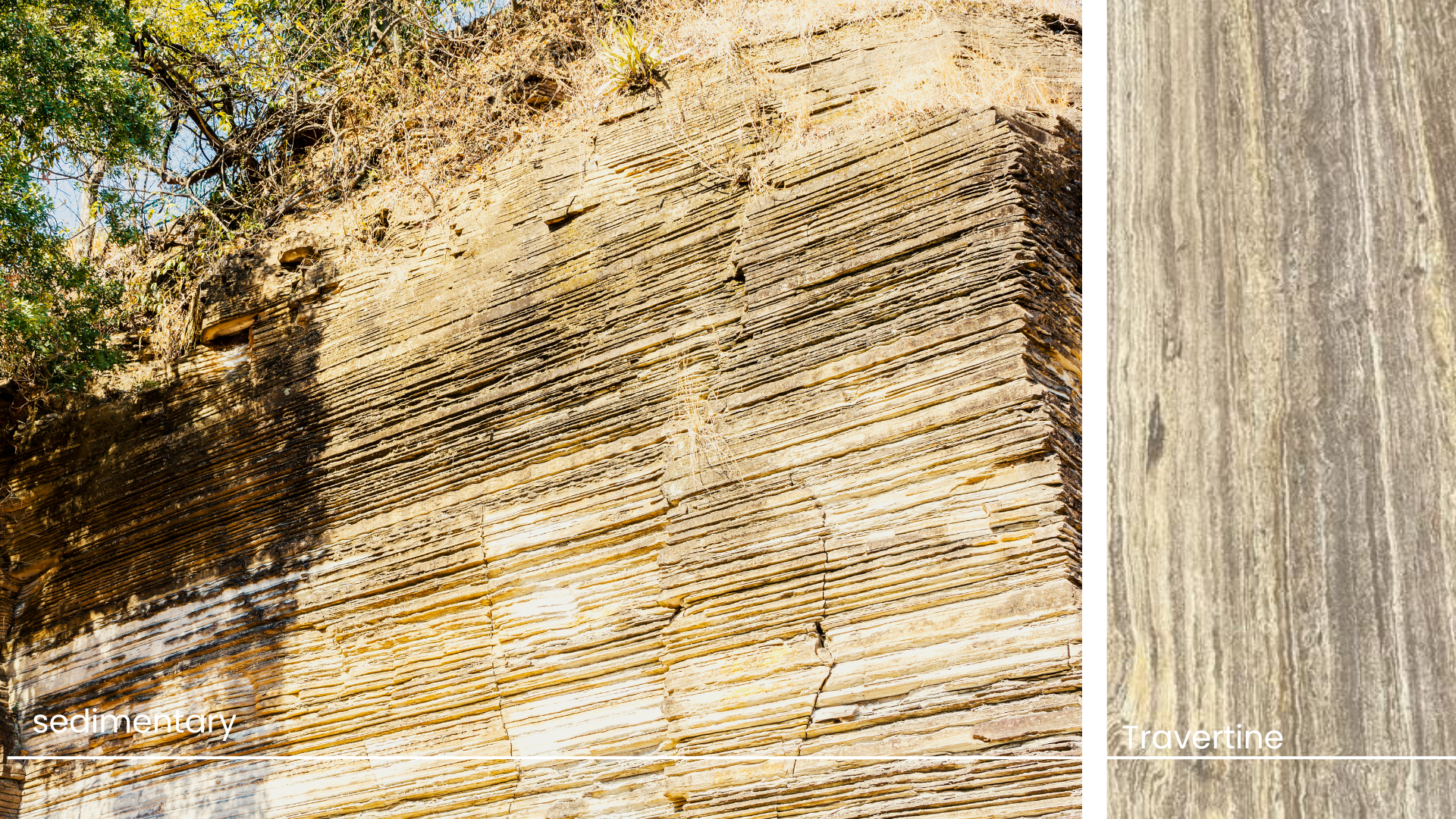
Sedimentary rocks are formed through the accumulation of sediments—tiny particles of minerals, organic matter, or other materials. Over time, these sediments are compressed and solidified into rock. This process happens in a variety of environments, from riverbeds and oceans to deserts and lakes. The way sedimentary rocks are formed determines their unique characteristics and classification.
Types of Sedimentary Rocks Based on Formation
1. **Clastic Sedimentary Rocks**
Clastic sedimentary rocks are formed from the accumulation of mechanical weathering debris. Over time, materials like sand, silt, and clay get transported by wind, water, or ice and then deposited in layers. These layers get compacted and cemented together to form solid rock.
– **Examples**: Sandstone, Shale, Conglomerate
– **Characteristics**: Clastic rocks often display visible layers or grains and can vary in hardness depending on the size of the particles.
2. **Chemical Sedimentary Rocks**
Chemical sedimentary rocks form when dissolved minerals precipitate from water. This process typically occurs in bodies of water, like lakes and oceans, where minerals accumulate as water evaporates. The resulting rock is often crystalline in appearance.
– **Examples**: Limestone, Gypsum, Halite
– **Characteristics**: Chemical sedimentary rocks often have a crystalline texture and are usually composed of minerals like calcite or halite.
3. **Organic Sedimentary Rocks**
Organic sedimentary rocks are formed from the accumulation of plant or animal debris. Over millions of years, organic materials like leaves, shells, or bones become compacted and transformed into rock. These rocks often contain carbon and are rich in fossils, providing a window into Earth’s ancient ecosystems.
– **Examples**: Coal, Chalk
– **Characteristics**: Organic rocks are rich in carbon and often feature fossilized remains of plants or animals.
4. **Bioclastic Sedimentary Rocks**
Bioclastic sedimentary rocks are a subtype of organic rocks, formed primarily from fragments of once-living organisms. These rocks are made up of shells, coral, and other marine life debris that get compacted and cemented over time.
– **Examples**: Coquina, Fossiliferous Limestone
– **Characteristics**: These rocks are often porous and contain a high amount of biological material, making them ideal for studying past marine environments.
Why Choose Sedimentary Rocks for Your Project?
Sedimentary rocks bring a unique aesthetic to any building project. Whether you’re looking for the durability of sandstone or the delicate texture of limestone, these stones offer both beauty and functionality. Their natural formations and textures give a timeless appeal, perfect for both traditional and modern designs.
By understanding the different types of sedimentary rocks and their formation, you can make more informed choices for your building projects. Explore our collection of high-quality sedimentary stones, perfect for a variety of applications!