Is Travertine a Good Choice for Cold or Humid Climates? A Complete Guide for U.S. Buyers
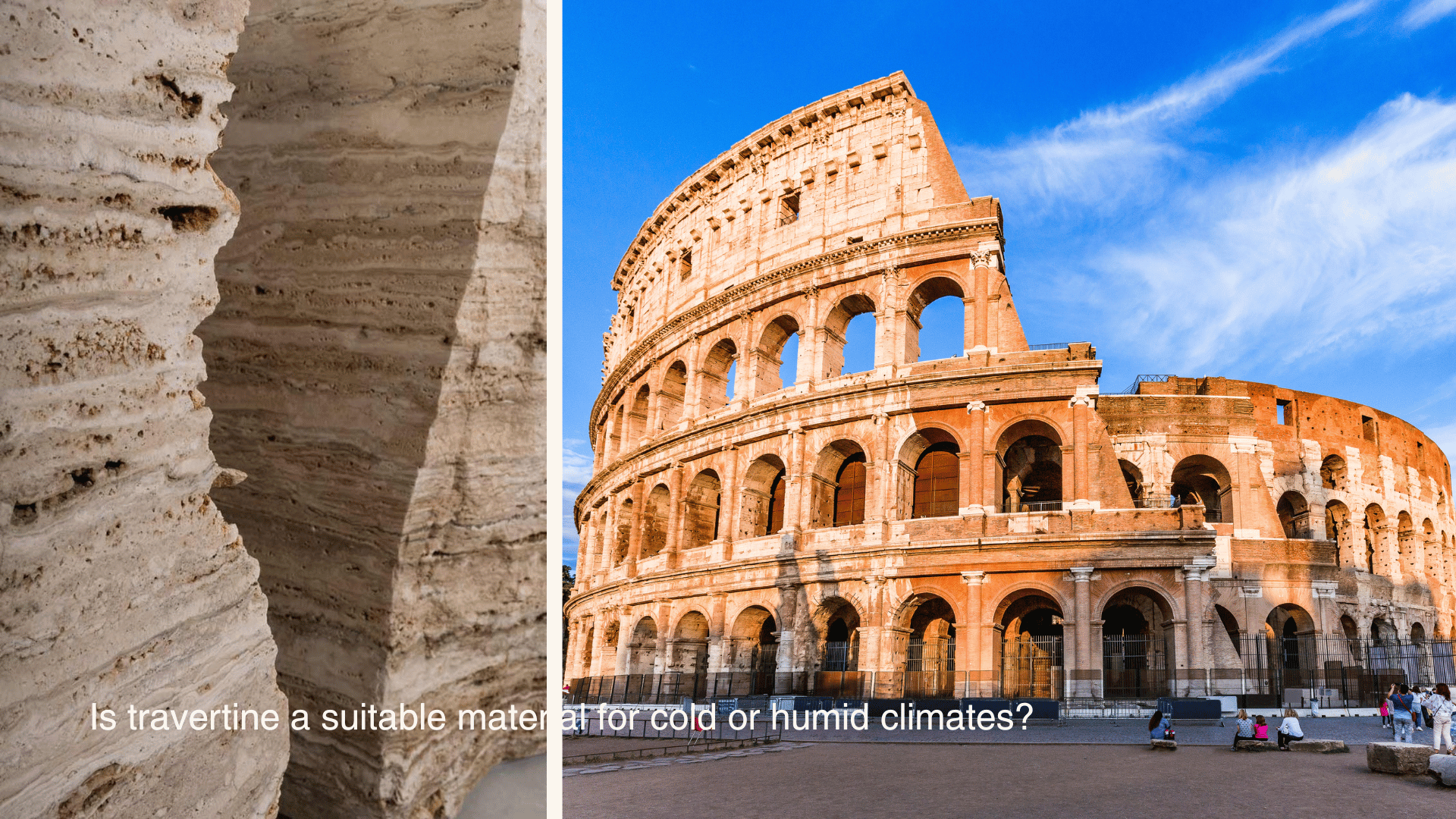
Travertine has long been one of the most popular natural stones in American residential and commercial projects—especially for exterior façades, pool decks, patios, and interior flooring. But one common question consistently appears among architects, contractors, and importers:
Is travertine a suitable material for cold or humid climates?
The short answer is yes—when sourced and processed correctly, high-quality travertine performs exceptionally well in both cold and humid environments.
This article explains why, addresses common misconceptions, and provides expert recommendations for U.S. climate conditions.
Why Travertine Performs Well in Humid and Cold Environments?
1. Travertine’s Natural Porosity Helps Prevent Damage
Many people assume that higher porosity is a disadvantage.
In reality, travertine’s porous structure allows it to “breathe.”
This means:
• Water does not get trapped inside the stone
• Internal pressure during freeze–thaw cycles is minimal
• The risk of cracking, splitting, or surface flaking is significantly reduced
Compared to dense stones like certain granites or marbles, which can trap moisture, travertine performs better in environments with fluctuating temperatures.
2. Proper Resin Filling Reduces Water Absorption
Modern travertine slabs and tiles used in the U.S. market are resin-filled and pressure-treated, which decreases water absorption dramatically.
High-grade resin filling results in:
• Lower moisture penetration
• Higher structural stability
• Better suitability for wet areas and freeze–thaw regions
This makes filled travertine an excellent choice for:
• Outdoor façades
• Shower walls
• Pool surroundings
• Patio flooring
3. Excellent Performance in Freeze–Thaw Cycles
One of travertine’s biggest advantages is its thermal elasticity.
Because the stone can expand and contract naturally without losing structural integrity, it performs extremely well in:
• Northern U.S. states
• Mountain regions (Colorado, Utah)
• Coastal areas with seasonal temperature changes
• Humid southern states (Florida, Louisiana)
Well-processed travertine is highly resistant to spalling and cracking, even in harsh winters.
4. Strong Adhesion Makes Travertine Ideal for Exterior Cladding
The stone’s natural texture helps it bond securely to mortar and façade systems.
This is a major reason why travertine is widely used in:
• Exterior wall cladding
• High-rise façades
• Commercial building surfaces
Even in humid states like Texas or cold states like Minnesota, travertine maintains strong adhesion when installed correctly.
Travertine in Humid Regions: What U.S. Buyers Should Know
in humid climates such as Florida, Georgia, and the Gulf Coast:
• Travertine remains dimensionally stable
• Does not warp or swell
• Maintains grip and slip-resistance when used outdoors
Sealing the stone is recommended to prevent:
• Mold growth
• Staining
• Mineral discoloration
With proper sealing and maintenance, travertine performs extremely well in humid environments.
Travertine in Cold or Snowy Regions
States such as New York, Illinois, Colorado, and Washington require materials that tolerate freeze–thaw cycles.
Travertine is suitable because:
• Its porous structure releases internal moisture
• It handles expansion and contraction without breaking
• Filled and sealed travertine resists water penetration
For heavy-snow regions, it is recommended to:
• Use premium-grade, filled travertine
• Apply a high-quality penetrating sealer
• Ensure correct installation slope for water drainage
Common Myths About Travertine—Corrected
Myth 1: “Travertine absorbs too much water.”
✔ Reality: Resin-filled travertine has excellent water resistance.
Myth 2: “Travertine cracks in cold weather.”
✔ Reality: Its breathable structure reduces pressure buildup, making it more freeze-resistant than many denser stones.
Myth 3: “Travertine is not suitable for coastal or humid states.”
✔ Reality: With proper sealing, travertine is widely used in coastal Florida, California, and Gulf states.
When Is Travertine NOT Recommended?
Travertine may not be ideal for:
• Very high-traffic commercial floors
• Areas exposed to acidic chemicals (restaurants, industrial kitchens)
• Projects requiring zero-porosity stone
For these cases, granite or quartzite may be more suitable.
Expert Recommendations for U.S. Buyers and Importers
To achieve the best performance in humid or cold climates:
✔ Choose Premium Grade or Select Grade travertine
✔ Ensure proper resin filling and pressure treatment
✔ Use professional waterproof sealing
✔ Hire certified installers familiar with freeze–thaw techniques
✔ Confirm drainage slope to prevent standing water
Final Verdict
Travertine is an excellent stone option for both cold and humid climates in the United States—when sourced, processed, and installed correctly.
Its natural porosity, freeze–thaw resilience, strong adhesion, and stable performance make it one of the most reliable and versatile natural stones in the market.
Looking for High-Quality Iranian Travertine for the U.S. Market?
We supply premium-grade travertine directly from the best quarries in Iran—inspected, resin-filled, and processed for U.S. climate performance.
📩 Contact us for samples, pricing, and shipping options.