The Difference Between Onyx and Marble: A Comprehensive Guide
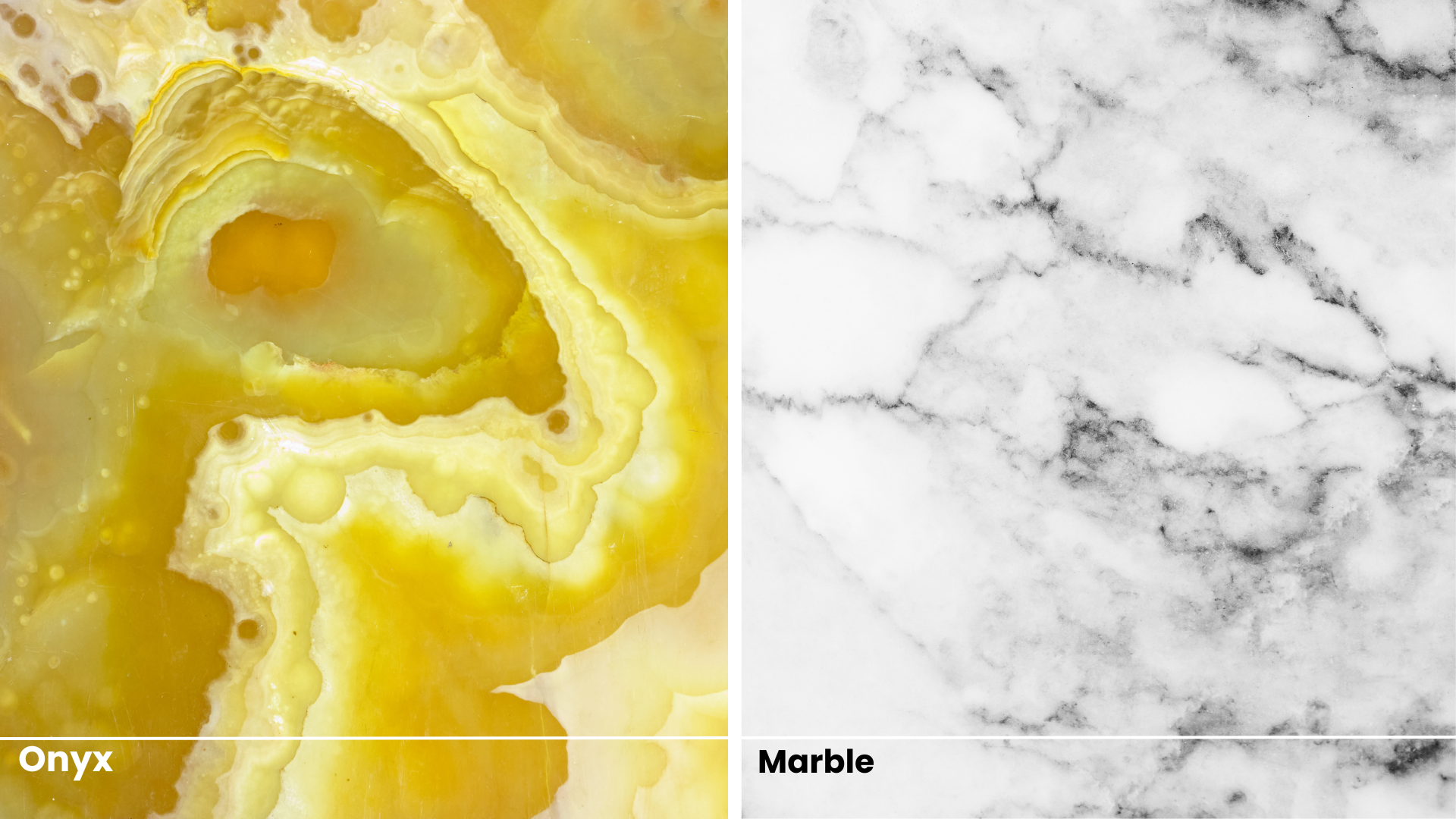
Onyx and marble are two of the most sought-after natural stones in the building and design world. Though they may appear similar at first glance, these stones differ significantly in terms of composition, appearance, and practical use. In this post, we’ll break down the key differences between onyx and marble, helping you choose the right stone for your next project.
1. **Formation and Composition**
The primary distinction between onyx and marble lies in their formation and chemical composition:
– **Onyx**: Onyx is a type of banded chalcedony, which is a form of quartz. It forms through the deposition of silica in groundwater, often in caves, resulting in its unique banded patterns.
– **Marble**: Marble, on the other hand, is a metamorphic rock formed from limestone under extreme heat and pressure. Its primary component is calcite (calcium carbonate), which gives it its distinct crystalline structure.
2. **Appearance**
One of the most noticeable differences between these two stones is their appearance.
– **Onyx**: Onyx is known for its striking, translucent bands in a variety of colors, ranging from deep blacks and greens to bright whites, oranges, and reds. Its translucency makes it a popular choice for backlit installations, creating a luxurious ambiance.
– **Marble**: Marble typically features soft veining patterns in shades of white, gray, black, and occasionally pink or green. Its classic, sophisticated look has made it a staple in architectural and interior design for centuries.
3. **Durability and Hardness**
Durability is an important factor when choosing a stone for your project, especially for high-traffic areas.
– **Onyx**: Onyx is relatively soft and prone to scratching, making it less suitable for floors or countertops in high-traffic areas. However, with proper care, it can be an elegant choice for decorative pieces and low-traffic surfaces.
– **Marble**: Marble is harder than onyx but still softer than granite, meaning it can withstand more wear and tear. However, it is also prone to etching and staining if not properly sealed and maintained.
4. **Applications and Use Cases**
Both stones can be used in a variety of applications, but their differences in durability and appearance often dictate where they are best used.
– **Onyx**: Due to its luxurious appearance and translucency, onyx is often used for statement pieces such as feature walls, backlit panels, decorative columns, and furniture accents.
– **Marble**: Marble is commonly used in countertops, floors, walls, and even outdoor installations. Its timeless beauty and relative durability make it a versatile choice for both residential and commercial spaces.
5. **Maintenance Requirements**
Proper maintenance is essential for both onyx and marble to preserve their beauty and longevity.
– **Onyx**: Onyx is highly sensitive to acids and can easily scratch. It requires gentle cleaning with a pH-neutral cleaner and regular sealing to protect its surface from damage.
– **Marble**: While marble is more durable than onyx, it is still susceptible to staining, especially from acidic substances. Regular sealing and the use of specialized marble cleaners can help maintain its appearance.
6. **Cost and Availability**
The cost of onyx and marble varies depending on the quality, rarity, and source of the stone.
– **Onyx**: Onyx tends to be more expensive than marble due to its rarity and the complexity of its extraction. Its striking appearance and luxurious appeal make it a high-end option for design projects.
– **Marble**: Marble, while still considered a luxury material, is generally more affordable and widely available than onyx, especially in common varieties like Cream marble or Pietra grey.
Conclusion: Which Stone Should You Choose?
When deciding between onyx and marble, consider both the aesthetic and functional needs of your project. Onyx is perfect for adding a dramatic, luxurious touch to decorative elements, while marble is a versatile and durable option for a wide range of applications.
By understanding the differences between these two natural stones, you can make an informed choice that enhances the beauty and value of your space.